

Wok Mastery for Home Kitchens
You don't need restaurant flames to make excellent Indo-Chinese food.
What You'll Learn
- Choose the right wok or pan for your stovetop
- Master "Hot Pot, Cool Oil" (Longyau) to prevent sticking
- Understand when high heat helps and when it hurts
- Season and maintain a carbon-steel wok
- Know what "wok hei" you can realistically achieve at home
- Implement fire safety protocols
What a Wok Actually Does Well
Fast heat response, efficient tossing and batch cooking, small oil amounts creating a deep pool at the centre, and high walls that facilitate aeration. The shape concentrates heat at the bottom while cooler walls let you push ingredients aside. It's a cooking system, not just a pan shape.
Choosing Your Vessel
Carbon steel (round bottom): traditional, builds patina, best for gas. Carbon steel (flat bottom): works on electric and ceramic, best choice for most home cooks. Cast iron wok: holds heat well on induction but too heavy for tossing. Large frying pan: valid beginner substitute. Non-stick: beginners only, never use on high heat.
Oil Smoke Points — The Safety Guard
Avocado oil (270°C/520°F): best for high-heat stir-frying. Peanut oil (230°C/450°F): traditional flavour, great for deep frying. Vegetable/grapeseed (215°C/420°F): neutral, good all-purpose. Extra virgin olive oil (190°C/375°F): DO NOT USE — will burn bitter. Match your oil to your heat level.
The Hot Pot, Cool Oil Technique (Longyau)
Heat your empty wok until it wisps smoke. Add oil, swirl to coat the surface. The oil heats in seconds, food goes in immediately. This creates a temporary non-stick surface. The hot metal + cool oil = protein won't stick. It's physics, not magic.
Seasoning a Carbon Steel Wok
Wash off the factory coating with hot soapy water — this is the only time you use soap. Dry completely over flame. Heat until smoking, add a thin layer of oil, wipe out with paper towels. Repeat 3-4 times. Expect patchiness at first — the patina builds over time. After cooking, rinse with hot water only and dry over flame.
Heat Control
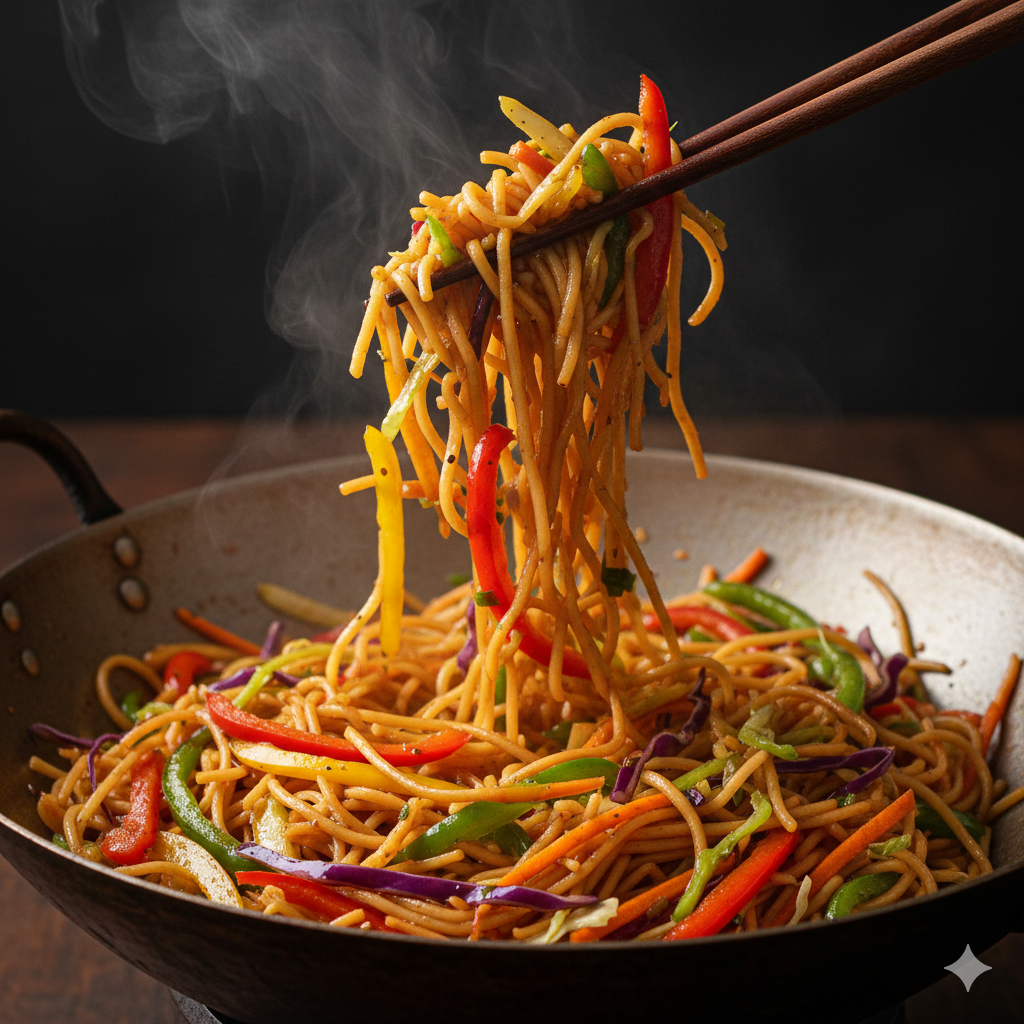
High heat: searing protein, quick vegetables, fried rice. Medium: aromatics, sauces, sticky glazes. Lower: finishing, holding. Most home cooking happens at medium-high — true screaming-hot wok work is hard to achieve on residential stoves, and that's okay.
The Wok Hei Reality Check
Restaurant burners: 100,000+ BTU. Home stoves: 10,000-15,000 BTU. Your home goal should be good browning, dryness control, and flavour concentration. Not chasing smoke and flames. Small batches matter more than BTU power. Two batches cooked properly beat one overcrowded mess.
Fire Safety — The Lid-Slide Method
Keep a large metal lid next to the stove. If fire starts: do NOT move the pan. Slide the lid over to starve the fire of oxygen. Turn off heat. Never use water on a grease fire — it causes explosive splashing. This is simple and effective. Practice the motion mentally before you need it.
Common Mistakes to Avoid
Overcrowding the wok
Too much food drops the temperature. Food steams instead of sears.
Starting with a lukewarm pan
Food sticks to cool metal. The pan should be hot before oil goes in.
Adding oil to a cold wok
This defeats the purpose of "hot pot, cool oil" — the oil won't create a non-stick surface.
Adding wet ingredients to hot oil
Water + hot oil = dangerous splatter. Pat everything dry.
Constantly stirring
Let food sit 30-40 seconds to develop char. Stirring too much prevents browning.
Equipment Needed
Quick Quiz
Your vegetables are releasing water and turning soft. What's the first fix?
6. Key Tips
- 1
Heat the pan first, then add oil
- 2
Small batches beat one giant soggy stir-fry
- 3
Carbon steel rewards use; non-stick rewards convenience
- 4
Wok hei is not the only marker of good cooking
- 5
Dry ingredients well before they hit the pan