The Philosophy
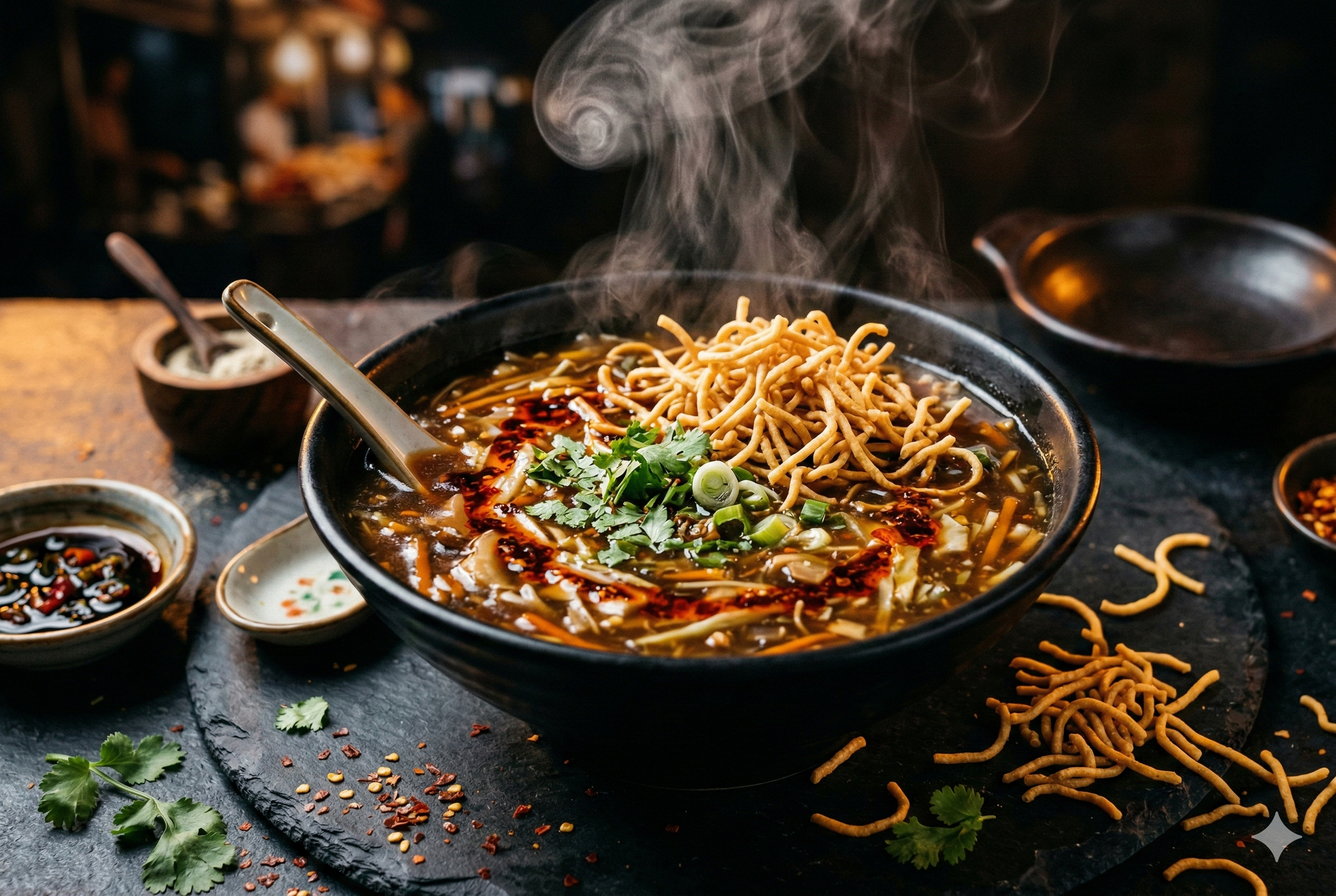
Manchow Soup is the heartier, bolder sibling of Hot and Sour Soup. While hot and sour relies on the sour-pepper balance, Manchow leans into SPICE and TEXTURE. The soup itself is thicker, more robust, loaded with finely diced vegetables. But the real star? Those crispy fried noodles on top.
The contrast is everything: piping hot, thick, spicy broth against shatteringly crispy noodles. The first few spoonfuls where the noodles are still crunchy are pure magic. This is why we add noodles at the table, never before.
Manchow vs Hot and Sour: Know the Difference
Both are Indo-Chinese restaurant staples, but they’re fundamentally different:
| Aspect | Hot and Sour | Manchow |
|---|
| Consistency | Light, silky | Thick, hearty |
| Primary flavour | Sour + pepper heat | Spicy + savoury |
| Vegetable cut | Julienne (matchsticks) | Fine dice |
| Signature element | Egg ribbons | Crispy noodle topping |
| Cornstarch | Light thickening | Heavy thickening |
| Accompaniment | Optional crispy noodles | ESSENTIAL crispy noodles |
If hot and sour is an elegant starter, Manchow is a warming hug in a bowl.
The Crispy Noodle Topping
This is non-negotiable. Manchow without crispy noodles is just spicy vegetable soup.
Store-bought option: Look for “crispy fried noodles” in the Asian aisle. They come in packets, already fried and crispy.
Homemade option:
- Cook thin egg noodles until just al dente
- Drain and dry completely (this is crucial)
- Deep fry small nests at 180C until golden and crispy (2-3 minutes)
- Drain on paper towels, season with salt
Rice noodle option (GF):
- Take dry rice vermicelli
- Drop directly into hot oil (180C)
- They puff up in 5 seconds - remove immediately
- Shatteringly crispy, naturally gluten-free
The Chilli Vinegar
Every Indo-Chinese restaurant serves Manchow with a small bowl of chilli vinegar on the side. This is the secret weapon.
To make chilli vinegar:
- Slice 4-5 green chillies into rounds
- Cover with white vinegar
- Let sit for at least 30 minutes (better overnight)
- The vinegar extracts the chilli heat
Add a splash to your bowl as you eat. The sharp vinegar cuts through the rich broth and adds another heat dimension.
The Thickness Factor
Manchow soup should be NOTICEABLY thicker than most soups. It should:
- Coat a spoon lightly
- Have visible body when you stir it
- Feel substantial, not watery
We use more cornstarch than hot and sour (45g vs 30g) specifically for this effect. If your soup seems thin after adding the slurry, mix another tablespoon of cornstarch with 2 tbsp water and add it in.
Common Mistakes
- Soup too thin - Don’t be shy with cornstarch. Manchow should be thick.
- Soggy noodles - Always add noodles at serving time, never before
- Vegetables too chunky - Fine dice is essential for proper texture
- Skipping the saute step - Cooking aromatics and veg before adding stock builds depth
- Forgetting chilli vinegar - This condiment is essential, not optional
Pro Tips
The Two-Bowl Test: When you lift a spoonful, the broth should cling to the vegetables rather than running off immediately. That’s the right thickness.
Noodle Timing: Tell your guests to eat the noodles first, before they absorb soup and go soft. The crispy-to-soft transition is part of the experience, but those first crunchy bites are the best.
Make It Richer: For restaurant-style richness, add 1/4 tsp MSG. Every Indo-Chinese restaurant uses it. There’s no shame.
Stock Quality: Use the best stock you can. Homemade vegetable stock is ideal. If using cubes, use 2 cubes for 1 litre water for a stronger base.
Protein Variations
Chicken Manchow
- Add 150g shredded poached chicken breast with the stock
- Or use leftover roast chicken
Prawn Manchow
- Add 150g small prawns after the vegetables are sauteed
- Cook 2 minutes before adding stock
Mixed Manchow
- Combine tofu, chicken, and prawns for the restaurant “mixed” version
- Adjust cooking times accordingly
Vegetable Variations
Extra Hearty: Add baby corn (sliced into rounds) and water chestnuts
Mushroom Lover: Use a mix of button, shiitake, and oyster mushrooms
Green Boost: Add a handful of chopped spinach or bok choy at the end
Corn Manchow: Add 100g sweetcorn kernels - popular variation
Serving Suggestions
- As a Starter: Before hakka noodles or fried rice
- With Spring Rolls: The classic Indo-Chinese pairing
- Meal in a Bowl: Add extra protein and serve as a main course
- Comfort Dinner: With crusty bread for dunking (fusion style)
- Party Spread: As part of an Indo-Chinese feast with dry starters
Storage & Reheating
Fridge: 2-3 days in airtight container (store soup and noodles separately)
Reheat: Gently on stovetop over medium heat. Add a splash of stock if it has thickened too much.
Crispy Noodles: Store in airtight container at room temperature. If they soften, re-crisp in a 180C oven for 3-4 minutes or in an air fryer.
Don’t Freeze: The vegetables and tofu don’t freeze well. Make fresh.
The Garnish Bar
Set these out for diners to customize:
- Crispy fried noodles (essential)
- Chilli vinegar (essential)
- Extra chilli oil
- Sliced green chillies
- Fresh coriander
- White pepper
- Extra soy sauce
Love this dish? Try these next:
Master the Techniques